Dread in the Lobby: Why the Minutes Before an Appointment Deserve Clinical Attention
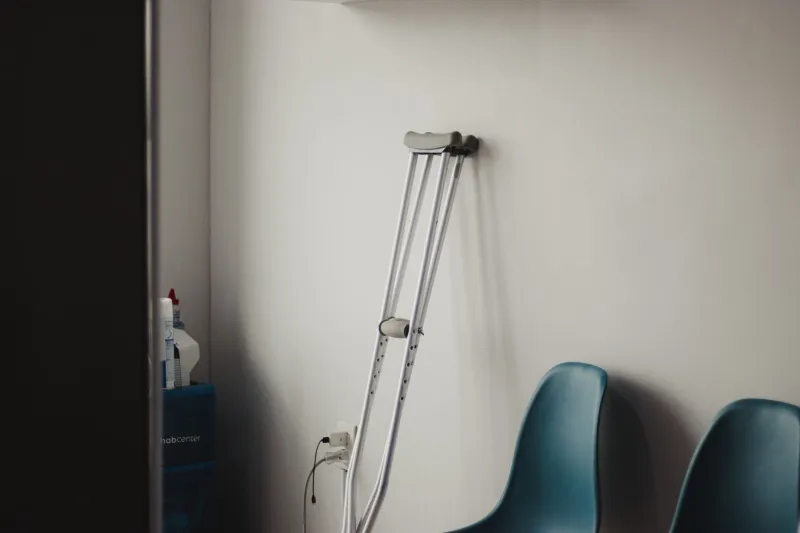
Consider the parking garage. For a surprising number of people in treatment, that is where the appointment actually starts — in the car, on the fourth floor, running through a rehearsed summary that will probably be abandoned within ninety seconds of sitting down.
Clinicians tend to think of the appointment as the unit of care. Patients experience something longer: the anticipation, the drive, the lobby, the clipboard, the ten minutes alone with a magazine from a previous administration. That surrounding envelope is where a substantial share of the emotional work of treatment gets done, and where a substantial share of the distress gets generated.
What the Body Does While You Wait
Anticipatory anxiety is not a metaphor. It is a measurable physiological state produced by a nervous system that has learned to prepare for something consequential. In the minutes before a scheduled stressor, sympathetic activation rises, heart rate and blood pressure increase, and the hypothalamic–pituitary–adrenal axis begins its slower response. Muscles tense. Attention narrows. Digestion is deprioritized. All of this is appropriate for a threat and disproportionate for a conversation.
The most instructive model comes from oncology. Anticipatory nausea before chemotherapy is one of the best-documented examples of classical conditioning in clinical medicine: after repeated pairings, the sights and smells of the infusion suite themselves become sufficient to produce nausea, before any drug is administered. The mechanism is straightforward associative learning, and it generalizes. Waiting rooms acquire properties. A particular chair, a particular receptionist, a particular smell of floor cleaner can become conditioned stimuli that produce a stress response on arrival, independent of what is about to happen.
A parallel phenomenon is familiar from primary care, where blood pressure readings taken in the office routinely run higher than readings taken at home. The white coat effect is usually treated as a nuisance for measurement. It is also a small demonstration of how powerfully context shapes physiology — and a reminder that a person who appears agitated in an exam room may simply be responding accurately to a room.
The Rehearsal Problem
Psychologically, the waiting period is dominated by rehearsal. Most people arrive with a script: the version of events they intend to present, edited for coherence and, often, for palatability. Preparing an account of one's week is not pathological. It is the same social competence that makes any difficult conversation possible.
It becomes costly when the rehearsal turns adversarial. Under anticipatory stress, memory retrieval becomes biased toward threat-congruent material. A person running through the week in the lobby is more likely to recall the argument than the recovery, the missed deadline than the finished project. The script tilts negative. Then a second process kicks in: evaluating the script. Is this worth mentioning? Will it sound like complaining? Did I already say this last time? By the time the door opens, the person has often drafted and discarded three versions of the same concern.
The consequence is familiar to anyone who has sat in either chair: the first ten minutes of a fifty-minute session get spent reconstructing what could have been written down, and the person leaves having disclosed less than they intended. Arriving already depleted also narrows what clinicians call the window of tolerance — the range of arousal within which a person can think, feel, and speak at the same time. Outside that window, people either shut down or flood, and neither state is conducive to the kind of reflective conversation therapy depends on.
There is a compounding factor as well. For many people, the waiting room is the first unsupervised stretch of time in a busy day. That is when the phone comes out. Fifteen minutes of scrolling through health information, symptom forums, or a news feed is an efficient way to convert mild apprehension into something closer to alarm.
Strategies Worth the Effort
The evidence on preparation is not enormous, but it is consistent enough to justify a short list. Pre-procedural preparation programs in pediatric settings — the work of child life specialists, for instance — reliably reduce distress, and the active ingredients appear to be predictability and a sense of control rather than distraction. Adult pre-visit preparation research points in a similar direction.
What seems to help:
- Write three lines, not a narrative. A brief note with the two or three things that matter most this week, plus one question, converts rehearsal into a task with an endpoint.
- Complete any measures at home. Questionnaires filled out in a lobby are completed by an aroused person; the same questionnaires completed at a kitchen table are completed by a more representative one.
- Plan the arrival time deliberately. Arriving forty minutes early extends exposure to the most anxiogenic environment in the building. Arriving late adds a different stressor. Ten minutes is usually about right, and the number is worth negotiating with the clinic's actual patterns.
- Use a brief, structured breathing exercise if it suits you. Slow breathing at roughly six breaths per minute has modest but real effects on self-reported anxiety and autonomic arousal. It is not a cure and it is not required; the point is to lower arousal enough to think.
- Prepare an "if-then" plan for the hard part. Implementation intentions — specifying in advance how you will respond to a specific difficulty, such as "if I blank out when asked where to start, I will read from my note" — have decent support in the behavior change literature and are easy to write on an index card.
- Put the phone away in the lobby. Not as a moral practice; as a practical one. The waiting room is a poor environment for unsupervised information gathering.
What does not appear to help: cramming. Attempting to resolve the substance of a difficult issue in the seven minutes before discussing it tends to produce a rehearsed position rather than an open one.
The Room Is Part of the Intervention
Here the argument turns from individual coping to institutional design. Most outpatient waiting areas are designed for throughput: enough chairs, a check-in window, a screen. Very little about them communicates anything about the care behind the door.
A few changes are inexpensive and consistent with what is known about environmental stress. Noise matters — televisions left on a news channel are a reliable source of ambient threat in a room full of people already primed for it. Natural light and views of vegetation have modest but repeatedly observed effects on stress markers. Privacy at check-in matters more than clinics typically assume, particularly for mental health settings where a name spoken aloud can be an involuntary disclosure. And wait-time transparency, so often treated as an administrative courtesy, is a psychological intervention: unpredictability amplifies anticipatory anxiety, and a simple update reduces it.
Some services have taken this further, treating the pre-visit period as structured content. Orientation materials sent before a first appointment, brief videos describing what the first session will involve, and written explanations of what will and will not be asked are all low-cost ways to convert an unknown into a known.
A Reasonable Division of Labor
The burden of managing appointment dread currently falls almost entirely on patients, who are advised to breathe, arrive early, and stay calm in a room designed with none of that in mind. A more defensible arrangement distributes the work. Patients can prepare specifically rather than endlessly. Clinicians can open sessions by asking what the person came intending to say, which is often different from what they say first. And clinics can treat the fifteen minutes before an appointment as a phase of treatment rather than a gap in the schedule.
The minutes in the lobby are not dead time. They are where the appointment is already underway, whether or not anyone has planned for it.